
National
From Years of Deficit to $39.3M Surplus; Economist Weighs In
NASSAU, BAHAMAS – The government’s reported budget surplus is sparking debate in Parliament, with questions about transparency and the accuracy of the figures. Our Chinasa Outten spoke with an economist to break down the numbers and explain what the surplus could mean for The Bahamas.


NASSAU , BAHAMAS –
The government’s reported budget surplus is sparking debate in Parliament, with questions about transparency and the accuracy of the figures. Our Chinasa Outten spoke with an economist to break down the numbers and explain what the surplus could mean for The Bahamas.
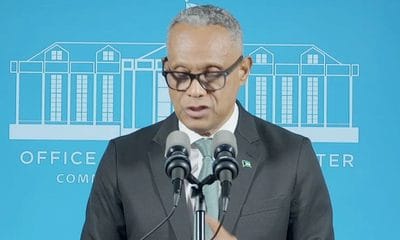
Davis says the latest figures show a steady improvement in the country’s public finances, following years of economic strain brought on by the COVID-19 pandemic and its aftermath.
But the opposition is challenging that assessment, calling the reported surplus “fiction” and questioning whether all government spending has been factored into the fiscal calculations.
The figures show the country’s deficit stood at $219.3 million before the pandemic, before climbing to a peak of $1.3 billion during the height of the COVID-19 crisis.
Since then, the country’s fiscal position has improved, with Davis describing the latest result as a historic surplus.
However, East Grand Bahama MP Kwasi Thompson argues that the exclusion of National Investment Fund spending raises questions about whether the surplus accurately reflects the government’s overall financial position.
Kwasi Thompson – Member of Parliament, East Grand Bahama
“You can stand up and shout and pat yourself on the back and say that you’ve gotten a surplus, but you have not taken account of all of the spending. You have not taken account of the $310 million of spending.”
Davis rejected that claim, defending the government’s figures and arguing that the opposition must understand how the numbers are calculated under the country’s modified cash basis of accounting.
Philip Davis – Prime Minister
“The information is there. Look at it and then come back and take into account the system we are in. This is a cash system, and leave the politricks to the person next to you, man.”
But beyond the political debate, economist Therese Turner-Jones says fiscal transparency remains crucial.
She says the public needs a clear and complete picture of the government’s financial position, including whether all relevant expenditures and obligations are being accounted for.
Therese Turner-Jones – Economist
“We’re not gonna say anyone is trying to deceive anybody, but I think what we need, what the public needs, and everybody needs is a full accounting of the government’s finances.”
Therese Turner-Jones – Economist
“Whatever state-owned enterprise they have, if they’re unable to pay their debts, it automatically goes onto the books of the government. And the prime minister himself, in this message, does say that we have to pay more attention to what’s happening with state-owned enterprises.”
And while the economist says the reported surplus is not a substantial amount in the context of the country’s overall finances, she says even a modest improvement could help ease some of the burdens faced by Bahamians.
Therese Turner-Jones – Economist
“If you don’t want to do that, then you’d say, okay, I can allocate more for social services, right? I can do more for the disabled. I can do more for parks and recreation, because that’s the payments have been clamouring for.”
With questions still surrounding the National Investment Fund and the transparency of fiscal reporting, the debate over the country’s financial position is far from over.
The bigger question now is whether this reported surplus signals a sustainable improvement in the country’s finances and, more importantly, whether Bahamians will eventually feel the benefits.





Court Rules GB Businessman Was Unlawfully Arrested, Prosecuted
Judge Rules Police Used Excessive Force On Handcuffed Man

Youths Clash With Police For A 3rd Day In Albania’s Anti-Government Protests

Ukraine Abandons Truce And Attacks Russian Oil Refinery

Seven New Impetigo Cases Reported as Health Officials Confirm Significant Decline

Bridgewater Joins Veteran Nesbitt With Brazilian Cub
Man Convicted of Murder as Former Accomplice Testifies Against Him
Trio Charged With Sexually Assaulting Teen at Party
Man Gets 8-Year Sentence for 2024 Home Invasion
Sexual Assault Lawsuit Against Sandals Royal Bahamian Dismissed Over Missed Deadline

70 Marine Protected Areas Assessed in National Conservation Effort

Congo’s Confirmed Ebola Cases Exceed 9,000 as Containment Efforts Falter
Seven New Impetigo Cases Reported as Health Officials Confirm Significant Decline
Bridgewater Joins Veteran Nesbitt With Brazilian Cub

Soul, Sound and Star Power: Ginuwine Headlines Atlantis’ R&B Brunch

Giving Tuesday: BNT Launches $100k Campaign to Protect Bahamas National Parks

A History of Royal Visits Since the Bahamas Gained Independence

From Years of Deficit to $39.3M Surplus; Economist Weighs In

-
 Court4 hours ago
Man Convicted of Murder as Former Accomplice Testifies Against Him
-
Crime2 days ago
Trio Charged With Sexually Assaulting Teen at Party
-
Court2 days ago
Man Gets 8-Year Sentence for 2024 Home Invasion
-
Court23 hours ago
Sexual Assault Lawsuit Against Sandals Royal Bahamian Dismissed Over Missed Deadline
-
 National2 days ago
70 Marine Protected Areas Assessed in National Conservation Effort
-
 International2 days ago
Congo’s Confirmed Ebola Cases Exceed 9,000 as Containment Efforts Falter
-

 Regional24 hours ago
Jamaica Begins Receiving Third-country Deportees Under Controversial US Agreement
-
 Regional2 days ago
UN Allocates US$75 Million for Aid to 507,000 People in Haiti