
National
Natl. Reparations Committee: “The King Should Not Come Empty-Handed”
NASSAU, BAHAMAS – When King Charles III touches down in The Bahamas, there will likely be plenty of pomp and pageantry, but for the Bahamas National Reparations Committee, there’s something far more important than a royal wave or handshake: an apology.


NASSAU , BAHAMAS –
When King Charles III touches down in The Bahamas, there will likely be plenty of pomp and pageantry, but for the Bahamas National Reparations Committee, there’s something far more important than a royal wave or handshake: an apology.
Committee Chair Dr. Niambi Hall Campbell-Dean says the King has an opportunity to acknowledge the wrongs of slavery and take a meaningful step towards reparations.
Dr. Niambi Hall Campbell-Dean – Chair, Bahamas National Reparations Committee
“We know that this crime has been committed, and we’re asking the King to call upon his powers as the head of state of our country and apologise for these crimes that have been committed, and do so in a way in which he can be held accountable for the crimes, and then engage in a reparations movement.”
But getting that apology may not be so easy.
On October 2, Buckingham Palace reportedly made it clear that King Charles would not issue a formal apology during his Caribbean tour.
The palace says official apologies and financial reparations are matters for the British government.
But Campbell-Dean says that’s no reason to stop pushing.
And she says the committee is looking for more than just words.
Dr. Niambi Hall Campbell-Dean – Chair, Bahamas National Reparations Committee
“Reparations is a movement that calls for justice, but it is also a movement that allows us in The Bahamas and us in the region to gain a better foothold and better standing for development.”
And that’s where the bigger conversation about reparations comes in.
Campbell-Dean says it’s not just about what happened hundreds of years ago.
She believes the effects of slavery and colonialism are still being felt today.
And she says reparations could help The Bahamas tackle some of the challenges it faces.
Dr. Niambi Hall Campbell-Dean – Chair, Bahamas National Reparations Committee
“The topic is not discussed in the framework of national development. I think a lot of times when people hear reparations, they just think that we’re out here mad because slavery happened, right? But that’s not what we’re saying. We’re saying that the legacy of enslavement and colonisation has impacted our country, has left us in a state of underdevelopment. How can we now look at that legacy and bring justice to what has happened so that we can build as a nation?”
And with the King’s visit just days away, the committee wants to make sure its message is heard.
It’s now working on a presentation to Cabinet, hoping to show how reparations could help with national development.
But Campbell-Dean says there’s also work to be done in getting more Bahamians involved in the conversation.
Dr. Niambi Hall Campbell-Dean – Chair, Bahamas National Reparations Committee
“We hope that our role in this visit is really to bring awareness and also specifically to make sure that reparations is on the agenda at CHOGM. We feel that without reparations on the agenda at CHOGM, that CHOGM really is a waste of time, because reparations is the movement, the social justice movement of the 21st century.”




Russia Strikes Nine Ukrainian Regions As New Report Shows Spike In Civilian Casualties

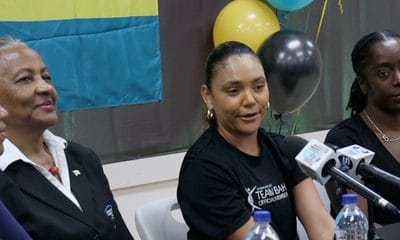
Gymnastics Federation Seeks Corporate Sponsorship for Carifta

Resident: “It’s Not Ethical, It’s Not Right, and It’s Not Acceptable”

Judge Slams Six-Year Delay In Murder Case, But Trial To Proceed
Shiver To Stand Trial After Court Rejects Bid To Dismiss Murder Conspiracy Case

U.S. Announces More Than $340 Million In Funding For The Caribbean
Man Convicted of Murder as Former Accomplice Testifies Against Him
Trio Charged With Sexually Assaulting Teen at Party
Court Rules GB Businessman Was Unlawfully Arrested, Prosecuted
Sexual Assault Lawsuit Against Sandals Royal Bahamian Dismissed Over Missed Deadline
Man Gets 8-Year Sentence for 2024 Home Invasion
Judge Rules Police Used Excessive Force On Handcuffed Man
Gymnastics Federation Seeks Corporate Sponsorship for Carifta
Resident: “It’s Not Ethical, It’s Not Right, and It’s Not Acceptable”

Cable Bahamas Turns Fun Into Fundraising for a Cause

Bus Drivers Reject Claim Strike Action on Hold

Natl. Reparations Committee: “The King Should Not Come Empty-Handed”

Agri. Minister: There’s No Need to Fear, We’re Open to Extending the Period Josh

-
 Court1 day ago
Man Convicted of Murder as Former Accomplice Testifies Against Him
-
Crime3 days ago
Trio Charged With Sexually Assaulting Teen at Party
-
Court1 day ago
Court Rules GB Businessman Was Unlawfully Arrested, Prosecuted
-
Court2 days ago
Sexual Assault Lawsuit Against Sandals Royal Bahamian Dismissed Over Missed Deadline
-
Court3 days ago
Man Gets 8-Year Sentence for 2024 Home Invasion
-
Court1 day ago
Judge Rules Police Used Excessive Force On Handcuffed Man
-
 Regional2 days ago
Jamaica Begins Receiving Third-country Deportees Under Controversial US Agreement
-

 Regional2 days ago
Psychiatrist Urges Caribbean to Raise Legal Age for Alcohol, Cannabis Use